Data Center Operations Interviews: What Hiring Managers Actually Test For
Data center interviews aren't like typical tech interviews — they're scenario-based and test how you think under pressure. Here's what to actually prepare for.
DC Jobs · Editorial Team

Data Center Operations Interviews: What Hiring Managers Actually Test For
If you've interviewed for tech roles before, a data center operations interview will probably surprise you. There's rarely a whiteboard coding challenge or a system-design question. Instead, you'll be asked what you'd do in the first sixty seconds after an alarm goes off — and the interviewer is watching how you think, not whether you memorized the right buzzword.
That difference trips up a lot of candidates, especially those coming in from adjacent trades like general IT support or electrical work who haven't interviewed for a critical-facilities role before. Here's what the process actually looks like, and how to prepare for it properly.
The Typical Process
Most data center technician and operations interviews follow a similar shape: a recruiter phone screen to confirm basics and interest, followed by a focused technical round covering power, cooling, networking, and troubleshooting scenarios. Larger operators and hyperscalers often add a behavioral round to assess how you handle real incidents and work with a team. Some processes include an on-site facility tour or a hands-on assessment — and if you're interviewing at a secure site, budget extra time for badging and access procedures, since that alone can take longer than you'd expect.
If you're aiming for a lead or operations-manager track rather than a technician role, expect more questions about process ownership, uptime accountability, and managing people under pressure — the technical bar is still there, but it's paired with leadership scenarios.
What They're Actually Testing
1. How you think through a live incident, not just what you know
The most common interview format is a scenario question: a cooling unit fails, a UPS alarm fires, a temperature sensor trips. The interviewer isn't looking for a single "correct" answer — they're grading your process. Do you check monitoring systems and adjacent sensors before touching hardware? Do you verify it isn't a false positive first? Do you know when to escalate versus when to handle it yourself?
A strong answer sounds structured: confirm the alert, check related systems, apply an immediate mitigation if needed, escalate appropriately, then document. Jumping straight to "I'd replace the part" without that sequence is one of the most common ways candidates lose points here.
2. Whether you understand the systems, not just the symptoms
Expect direct technical questions on power distribution (single-phase vs. three-phase, UPS topology — N+1, 2N, distributed redundant), cooling systems (CRAC/CRAH units, containment, airflow), and environmental monitoring platforms. You don't need to know every vendor's software, but naming the categories you've worked with (DCIM tools, BMS platforms, specific environmental monitoring systems) signals real hands-on experience rather than textbook knowledge.
3. Attention to detail on cabling and documentation
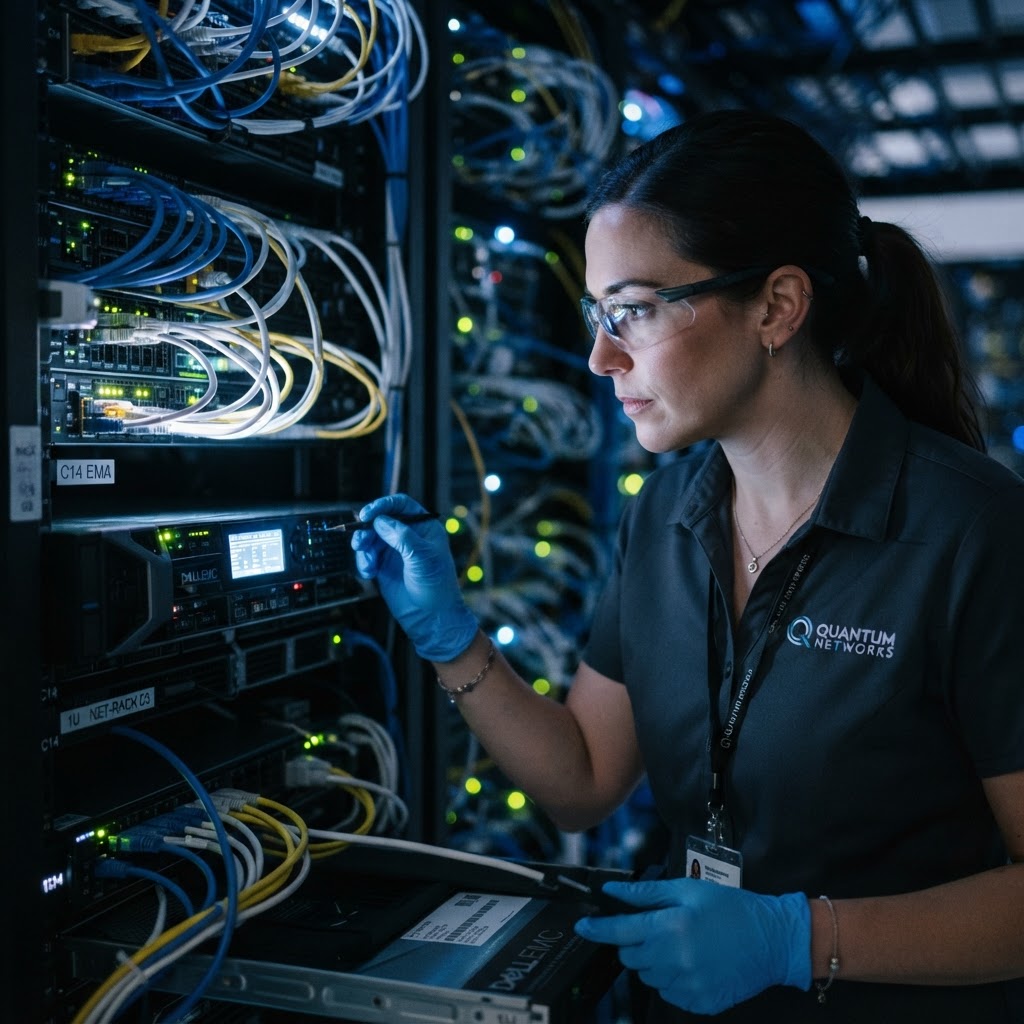
Cabling questions show up in nearly every data center technician interview, at every level. This isn't a minor topic — clean, labeled cable runs are one of the most visible signals of work quality in this field, and interviewers know it. If you have photos of past cabling or rack work, bring them. A visual portfolio does more to prove competence here than a verbal description ever will.
4. Whether you actually understand the job, not just the paycheck
Interviewers commonly ask why you're drawn to this field specifically, partly to confirm you understand what you're signing up for: 24/7 shift coverage, physical demands, and high-stakes responsibility where a mistake can mean significant downtime. Candidates who talk generically about "liking tech" without acknowledging the operational reality of the role tend to stand out for the wrong reasons.
How to Actually Prepare
- Practice narrating your process out loud, not just landing on the right answer. Interviewers are grading the reasoning path as much as the conclusion.
- Know your facility fundamentals cold: power redundancy models, basic cooling system types, and what the common alarm states actually mean operationally — not just definitions, but what action each one requires.
- Bring evidence of hands-on work — photos of cable management, past projects, or certifications — rather than relying purely on verbal descriptions.
- Be upfront about the realities of the role. Shift work, physical demands, and high-pressure incident response aren't downsides to gloss over — showing you've thought about them honestly builds more credibility than pretending they don't matter to you.
- If you're coming from an adjacent trade (HVAC, electrical, general IT), lean into that overlap directly rather than downplaying it — the skill sets share more in common with data center operations than people expect, and naming that connection shows self-awareness about your transferable experience.
The Bottom Line
Data center interviews reward structured thinking and hands-on credibility over polished delivery. You're not being tested on how well you interview — you're being tested on how you'd actually behave at 3 a.m. when an alarm goes off and nobody else is around to make the call. Prepare for that reality specifically, and the interview itself gets a lot less intimidating.
*Ready to put this into practice? Browse current data center technician and operations roles.