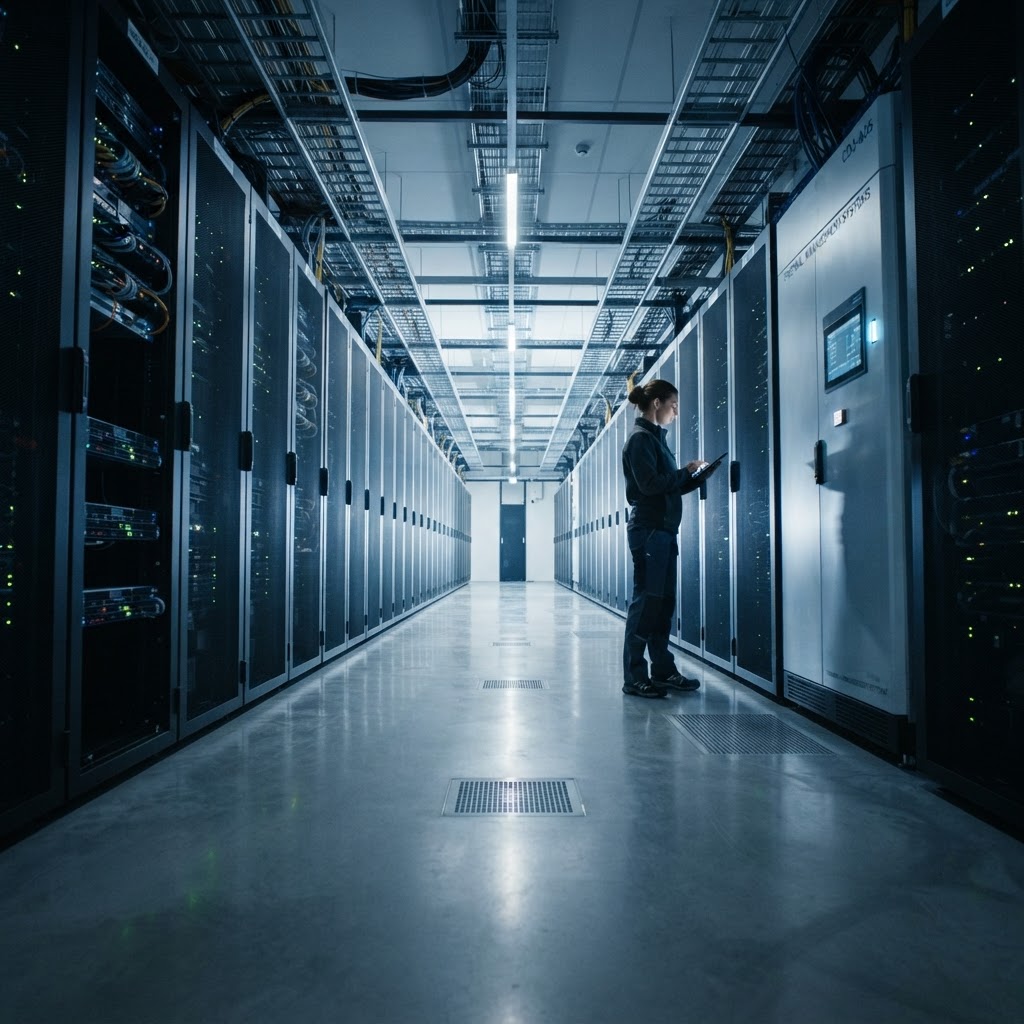
Breaking Into AI-Era Data Centers: The Skills Roadmap for APAC Technicians
The Asia-Pacific data center boom is creating a massive labor shortage, opening new career paths for technicians skilled in high-density power, liquid cooling, and fiber optics.
DC Jobs · Editorial Team

Asia Pacific's data center industry is in the middle of its biggest build-out in a decade — and it's running into the same wall as everyone else chasing AI infrastructure: not enough skilled people to run it.
The numbers tell the story. APAC's data center development pipeline hit a record 26.5 gigawatts in the first half of 2026 alone, with Southeast Asia — particularly Malaysia and Thailand — leading the charge. Total regional capacity is projected to nearly double from 32 GW to 57 GW by 2030. Established hubs like Singapore and Tokyo are running vacancy rates below 5%, which tells you demand isn't slowing down even as new supply comes online.
But growth on this scale doesn't run on hyperscaler announcements and investment dollars alone. Every new megawatt of capacity needs people who can install it, cool it, power it, and keep it running — and the industry is increasingly power-constrained, not just talent-constrained, which is changing what "data center skills" actually means.
If you're trying to break into this field, or move up within it, here's what's actually changing and where to focus.
Why AI Infrastructure Needs a Different Skill Set
Traditional data centers were built around connectivity — proximity to fiber routes and internet exchanges. AI-focused facilities are increasingly built around power availability instead, because training and running large models draws far more electricity per rack than traditional cloud or enterprise workloads.
That shift changes the day-to-day technical demands in a few concrete ways:
- Higher power density per rack means electrical systems, switchgear, and battery/UPS infrastructure are being pushed harder and need closer monitoring.
- Liquid cooling is moving from niche to standard in AI-dense facilities, alongside traditional air-cooling, which means technicians increasingly need to understand both systems, not just one.
- Fiber and network cabling needs have grown sharply — AI training clusters require dramatically more interconnects between servers than a traditional CPU-based data hall, which is driving demand for structured cabling and fiber-splicing skills specifically.
- Environmental and power-quality monitoring has become more central, since compute loads can spike quickly and unpredictably compared to steadier traditional workloads.
None of this requires a full engineering degree to get started. Most of these are skilled-trade and technician-level roles that reward hands-on competence and relevant certifications over a four-year degree — which is good news if you're looking for a faster path in.
The Core Skill Areas to Build
1. Electrical and power fundamentals
This is the foundation. Understanding how power is distributed through a facility — from utility feed through switchgear, UPS systems, and battery backup — is relevant whether you're aiming for an electrician-track role or a facilities engineering path. You don't need to design the electrical system to be highly employable maintaining and troubleshooting one.
2. Cooling systems — air and liquid
HVAC fundamentals remain essential, but liquid cooling knowledge is becoming a genuine differentiator as high-density AI racks push traditional air cooling to its limits. Even a basic understanding of how liquid cooling loops work, and what "thermodynamics at the rack level" actually means, sets a candidate apart.
3. Fiber optics and structured cabling
AI clusters need dense, high-bandwidth interconnects between servers, which means fiber-splicing and structured cabling skills are in real demand right now — and they're some of the fastest, most affordable technical skills to certify in, often through short hands-on courses rather than long academic programs.
4. Environmental and power-quality monitoring
Knowing how to read and act on power quality data, air quality monitoring, and environmental sensors is increasingly part of the job, not a specialist add-on — especially as facilities scale their compute density and need tighter operational visibility.
Where to Get Started
You don't need to enter through a four-year engineering degree. A few realistic paths into the field:
- Technical/vocational programs focused on electrical trades, HVAC, or fiber optics — often 6-18 months, far faster than a full degree track.
- Vendor and industry certifications — fiber-splicing certification courses, electrical testing and measurement credentials, and data center-specific programs are increasingly recognized by employers as proof of practical competence.
- Apprenticeship-style entry roles — many operators and contractors in the region are building out structured entry-level training as the labor shortage bites, so it's worth looking directly at job listings for "trainee," "apprentice," or "junior technician" postings rather than assuming you need prior experience to get in the door.
The Bottom Line
AI infrastructure is reshaping what "data center skills" means faster than most training pipelines can keep up — which is actually an opportunity if you're early. The region needs electricians, cooling technicians, fiber splicers, and facilities operators at a pace that outstrips the people qualified to fill those roles today. You don't need a decade of experience or an engineering degree to start; you need the right foundational skills and the willingness to get hands-on training now, while demand is still outpacing supply.
Looking for entry points into the field? Browse current data center technician and facilities roles on DC Jobs.
Related articles
The Commissioning Bottleneck: Why APAC Can't Certify Facilities Fast Enough
Which Data Center Certifications Actually Pay Off in APAC? A 2026 Salary Benchmark